Jewellery Through the Centuries: Visiting the Victoria and Albert Museum
When we go to London it is usually to visit the Victoria and Albert Museum.
It’s one of those places where you can easily lose an entire afternoon wandering through room after room of creativity. The museum celebrates design in all its forms — fashion, furniture, textiles, sculpture, ceramics and jewellery — and it’s filled with extraordinary objects from across the world.
For anyone who loves making things by hand, it’s an endlessly inspiring place to spend time
One of my favourite parts of the museum is the Jewellery Gallery.
Stepping into the room feels a little like opening a treasure chest. Inside are hundreds of pieces spanning centuries of jewellery making, each one telling a story about the people who wore it and the craftspeople who made it. You can see delicate ancient pieces, intricate Renaissance designs, sentimental Victorian jewellery and bold twentieth-century creations all in one place.
What I love most is seeing the sheer variety of techniques and styles. Across the centuries jewellers have experimented with engraving, stone setting, enamelling, casting and intricate metalwork — each generation leaving its own mark on the craft. It’s a reminder that jewellery has always been more than decoration. It carries memory, status, love, celebration and personal stories.
Something I think about often when I’m designing my own pieces.
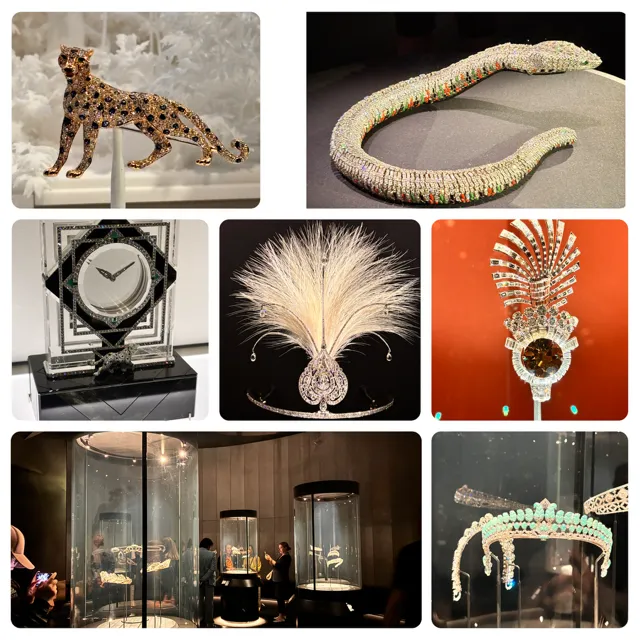
The V&A is also famous for its exhibitions, and I’ve been lucky enough to visit a few over the years.
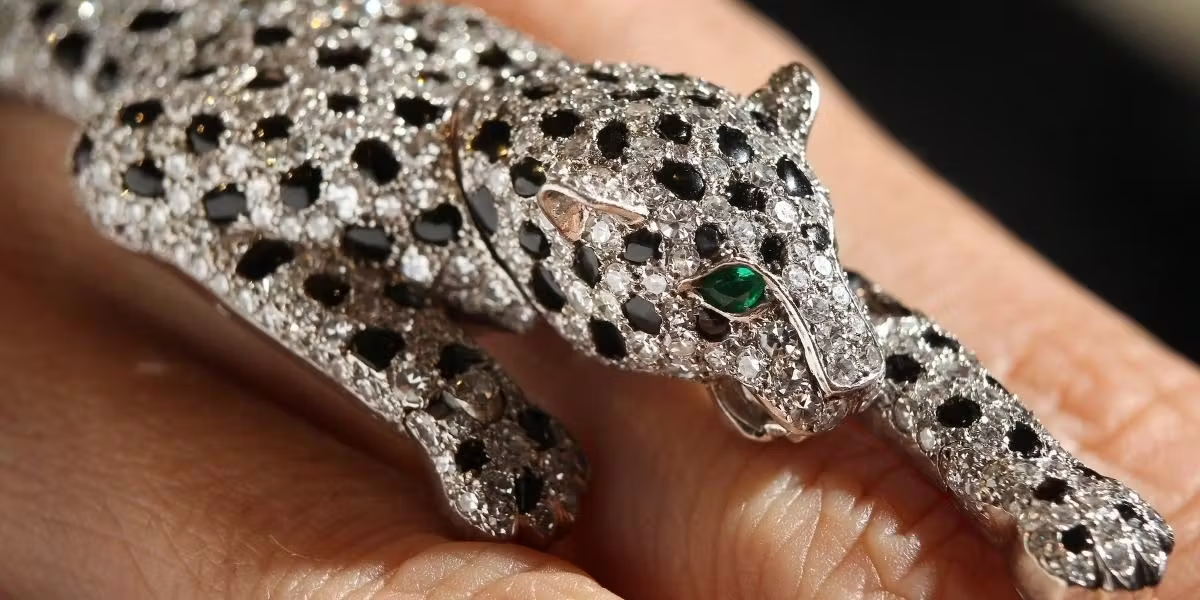
The Cartier exhibition was truly spectacular. Seeing those famous pieces up close — tiaras, necklaces and historic jewels worn by royalty and film stars — was unforgettable. Photographs can never quite capture the brilliance of those gemstones or the intricate craftsmanship involved.
Another exhibition I loved was the one dedicated to Gabrielle “Coco” Chanel. It explored not only her fashion but also her jewellery, which was revolutionary in its own way. Chanel mixed costume jewellery with fine pieces and encouraged women to wear jewellery boldly and creatively rather than simply as symbols of wealth. Her approach to design still feels surprisingly modern.
I know I am leaving it late, but I’m hoping to visit the Marie Antoinette exhibition too. It promises to explore the world of the French queen through objects, fashion and design, and I can imagine it will be filled with the kind of opulent craftsmanship that defined the French court of the eighteenth century.
Museums have a wonderful way of bringing history to life through objects, and jewellery often plays a small but fascinating part in those stories. Whenever I visit the V&A, I always come away feeling inspired, not because I want to copy what I see — the pieces belong to their own time — but because it reminds me how long jewellery making has been part of human creativity. For thousands of years people have shaped metal, carved stones and created small objects designed to be worn close to the body. Jewellery marks moments in our lives — celebrations, memories, love stories and personal milestones.
In that sense, the pieces I make in my little workshop in Norfolk are part of a much longer story and that’s something I rather love. If you’d like to explore some of the jewellery inspired by my own stories and surroundings here in Norfolk, you can browse the collection here on my website. Each piece is designed and handmade in my Fakenham workshop, ready to carry its own story.


